TL;DR / Short answer
Aerial roof documentation is a strong visibility tool, not a full roof inspection by itself.
A roof can look simple from the ground, but the right documentation process depends on access, roof type, slope, height, weather exposure, drainage, materials, age, and the decision that needs to be made.
The best roof documentation process usually starts with the right question: what do we need to know, and who needs to review the information?
A drone can help with many visibility and recordkeeping needs, but it does not replace every inspection method. The search phrase "drone roof inspection" is common; TwoBit's safer service framing is aerial roof documentation: clear visual records of roof surfaces, edges, drainage areas, penetrations, rooftop equipment, and hard-to-see exterior conditions.
Use drone documentation when aerial visibility helps. Use a qualified hands-on professional when the question requires touch, testing, material removal, repair decisions, insurance determinations, code review, or certification.
Method selector
Start with the question, then choose the method.
A roof photo set, ladder look, thermal screen, interior review, and hands-on roof walk answer different questions. The premium result is choosing the smallest method that gets the right reviewer useful evidence.
Good first filter
Visibility, access, physical verification, thermal context, or interior evidence.
Do not overbuy
If the question only needs a dated visual record, do not start with the most expensive workflow.
Ground visual inspection
A first look after a storm or visible exterior concern.
- Strength
- Fast, simple, and low-risk.
- Limit
- Limited view of upper roof surfaces.
Ladder or eave inspection
Gutters, drip edge, fascia, lower roof edges, and close visible details.
- Strength
- Better close-up access from the roof edge.
- Limit
- Limited reach and safety considerations.
Manual roof walk
Hands-on roofing evaluation by a qualified professional.
- Strength
- Can feel surface conditions and inspect details directly.
- Limit
- Not always safe or appropriate for every roof.
Aerial roof documentation
Aerial documentation of visible roof conditions.
- Strength
- Clear overview and detail images without immediately walking the roof.
- Limit
- Cannot confirm hidden damage or feel soft decking.
Thermal roof screening
Screening for thermal patterns that may suggest moisture or insulation differences.
- Strength
- Adds another layer of information under the right conditions.
- Limit
- Condition-dependent and not a standalone leak diagnosis.
Interior or attic inspection
Leak tracing, decking review, ventilation, insulation, and interior water staining.
- Strength
- Shows conditions not visible from outside.
- Limit
- Requires access and qualified interpretation.
The right method depends on the roof system, suspected issue, site access, safety, weather, and the next decision.
Where traditional roof inspection still matters
Ground, ladder, roof-walk, and interior review still answer questions a drone cannot.
Traditional roof inspection methods are still important. The right starting point depends on whether the question needs visual context, close physical verification, interior evidence, or a professional determination.
Traditional method
Ground visual inspection
A ground review is often the safest first look after a storm, leak concern, or visible exterior issue.
Visible clues it can help review
- Missing shingles or lifted sections
- Tree impact, sagging rooflines, or large debris
- Damaged gutters, loose fascia, or visible exterior damage
- Use it for
- Quick first look, storm triage, and obvious exterior concerns.
- Escalate when
- Upper roof surfaces, flat roof drainage, hidden leak paths, or professional repair decisions.
Traditional method
Ladder or eave inspection
A ladder or eave review gives a closer view of roof edges, gutters, fascia, soffits, drip edge, flashing, and lower roof surfaces.
Visible clues it can help review
- Gutter damage or granule buildup
- Loose or missing edge materials
- Lower shingle damage, edge separation, and drainage problems
- Use it for
- Roof edges, gutters, fascia, and close visible details.
- Escalate when
- Full roof documentation, large roofs, steep roofs, or concealed damage.
Traditional method
Manual roof walk
A manual roof walk is the strongest method when qualified hands-on evaluation is necessary.
Visible clues it can help review
- Soft or weakened decking that needs physical confirmation
- Close inspection of shingles, seams, flashing, or membrane areas
- Repairs, penetrations, transitions, and walkable areas
- Use it for
- Qualified hands-on evaluation and repair decision support.
- Escalate when
- Every safety condition or complete documentation unless it is paired with organized photos and notes.
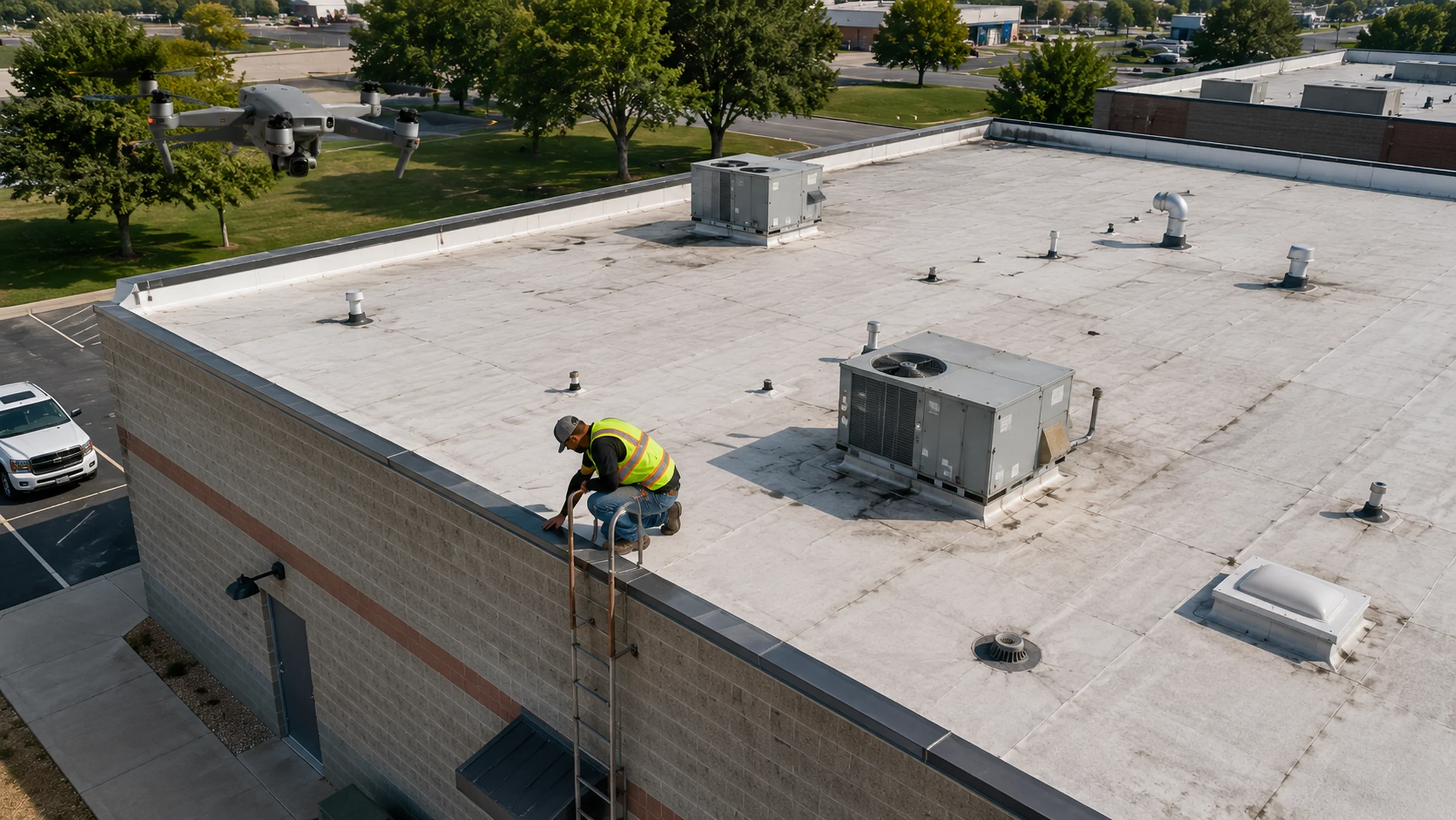
What drone roof documentation can show
A drone improves visibility, context, and organized records.
For TwoBit Aerial, the more accurate phrase is aerial roof documentation. The goal is to create clear visual records that can support review, follow-up planning, contractor coordination, and property records.
What a drone can show
What a drone cannot confirm
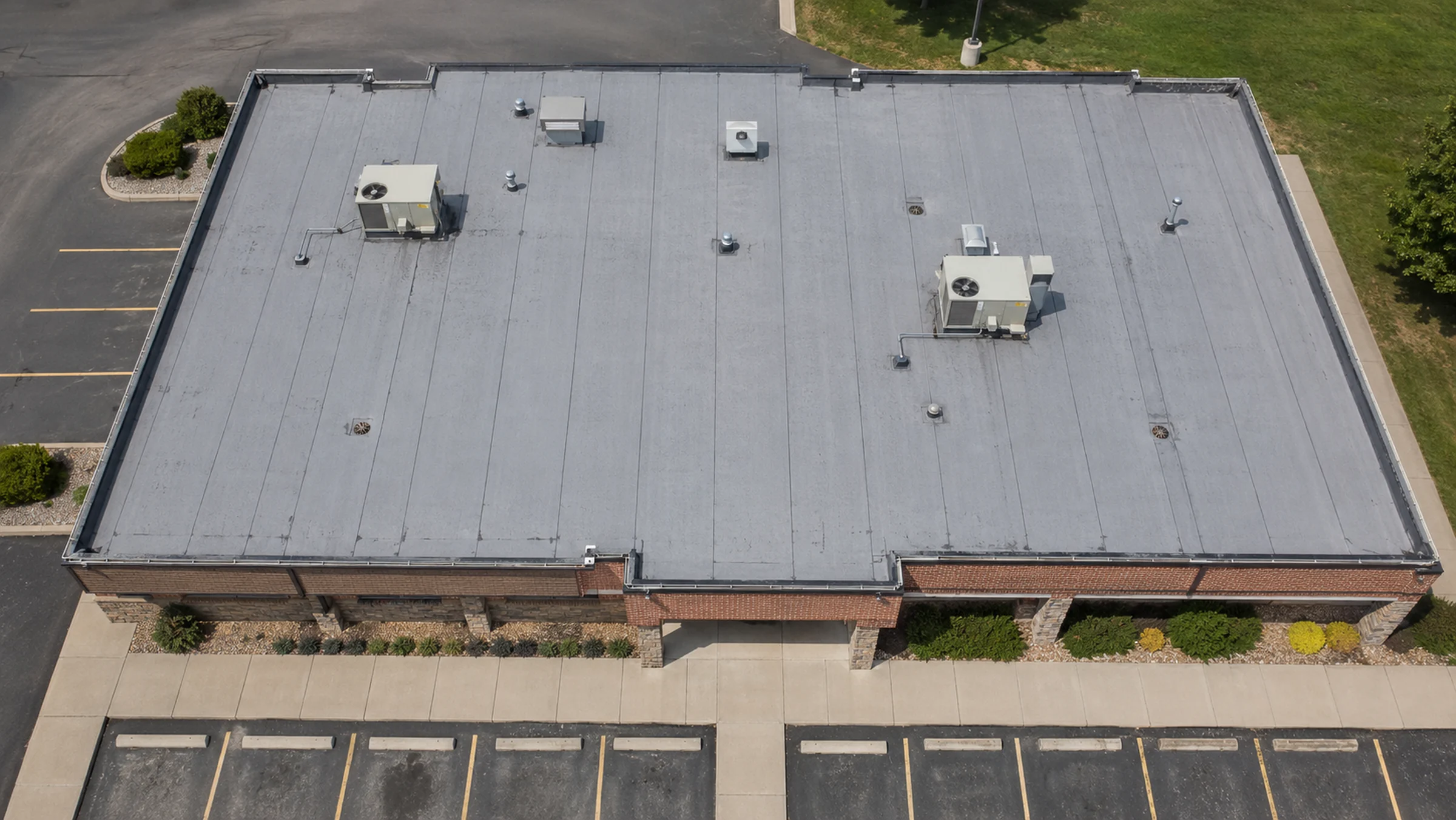
Thermal screening
Thermal imagery supports review, but it is not the final leak answer.
A regular drone photo shows visible surface detail. Thermal imaging records infrared radiation and displays temperature patterns. Under the right conditions, thermal roof screening may help identify thermal anomalies that deserve follow-up.
Thermal screening can sometimes help with suspected moisture patterns on compatible low-slope roofs, thermal differences around repairs or penetrations, and areas that may deserve closer inspection.
It does not automatically prove a leak. It shows apparent temperature differences that must be interpreted carefully and confirmed when necessary by the right roof professional.
The ASTM infrared roof-insulation practice addresses the conditions and verification needed for locating wet insulation using infrared imaging, and it does not determine the cause of moisture or the point of entry. That is why this article treats thermal as screening support, not leak proof.
Thermal context
Conditions matter
Insurance conversations
Aerial photos can support communication, but they do not decide claims.
Drone imagery can be helpful in insurance-related documentation, but it should be framed carefully.
Aerial photos may help create a clear visual record of the roof and surrounding property. That record may be useful when discussing the property with a roofer, contractor, property manager, adjuster, or insurance representative.
Keep the claim decision separate
Drone roof documentation can support records and conversations. It does not determine coverage, causation, liability, payment, or whether a claim should be approved.
If repairs are completed, save invoices, photos, contractor notes, and dates. If a concern appears in aerial images, ask the appropriate professional to review it.
Documentation value
Useful records support the conversation, not the outcome.
- 01General roof condition at the time of capture
- 02Visible storm-related exterior concerns
- 03Debris, tree impact, drainage issues, or visible areas that deserve closer review
- 04Before-and-after repair conditions
- 05Context for contractors or claim-related conversations
How to choose the right roof documentation method
Choose the starting point by the decision you need to make.
Drone documentation is often a strong first step when the main need is visibility, records, or communication. It is not enough when the question requires physical confirmation.
When a drone is a strong starting point
When a drone is not enough
Decision pathway
How to choose the right roof inspection method
Pick the lane that matches the decision in front of you. If the question involves hidden conditions, certification, insurance outcome, repair scope, or safety, route the record to the appropriate qualified professional.
Document first
Use aerial records when the buyer mainly needs visibility, context, or before-and-after documentation.
1.1
I want to see what my roof looks like.
Drone roof documentation.
1.2
The roof is steep or unsafe to walk.
Drone documentation before considering hands-on access.
1.3
I manage a church, school, warehouse, or commercial building.
Drone overview and detail documentation, with roofing professional review as needed.
1.4
I need before-and-after repair records.
Drone documentation before and after work.
Document, then route to the right reviewer
Use imagery to orient the conversation, then involve a roofer, interior reviewer, or thermal workflow when the question goes deeper.
2.1
I see shingles missing from the ground.
Ground review, drone documentation, then roofer follow-up.
2.2
I think I have a leak.
Interior or attic review and roofer follow-up; drone imagery may document exterior conditions.
2.3
I need to know if insulation is wet.
Thermal screening may help under proper conditions, but confirmation may require additional methods.
Professional decision first
When certification, coverage, repair scope, or hidden conditions matter, the image set is supporting material, not the decision maker.
3.1
I need insurance-related photos.
Drone documentation can support communication, but claim decisions remain with the insurer and qualified professionals.
3.2
I need a certified roof condition opinion.
Qualified roofer, inspector, engineer, or other appropriate professional.
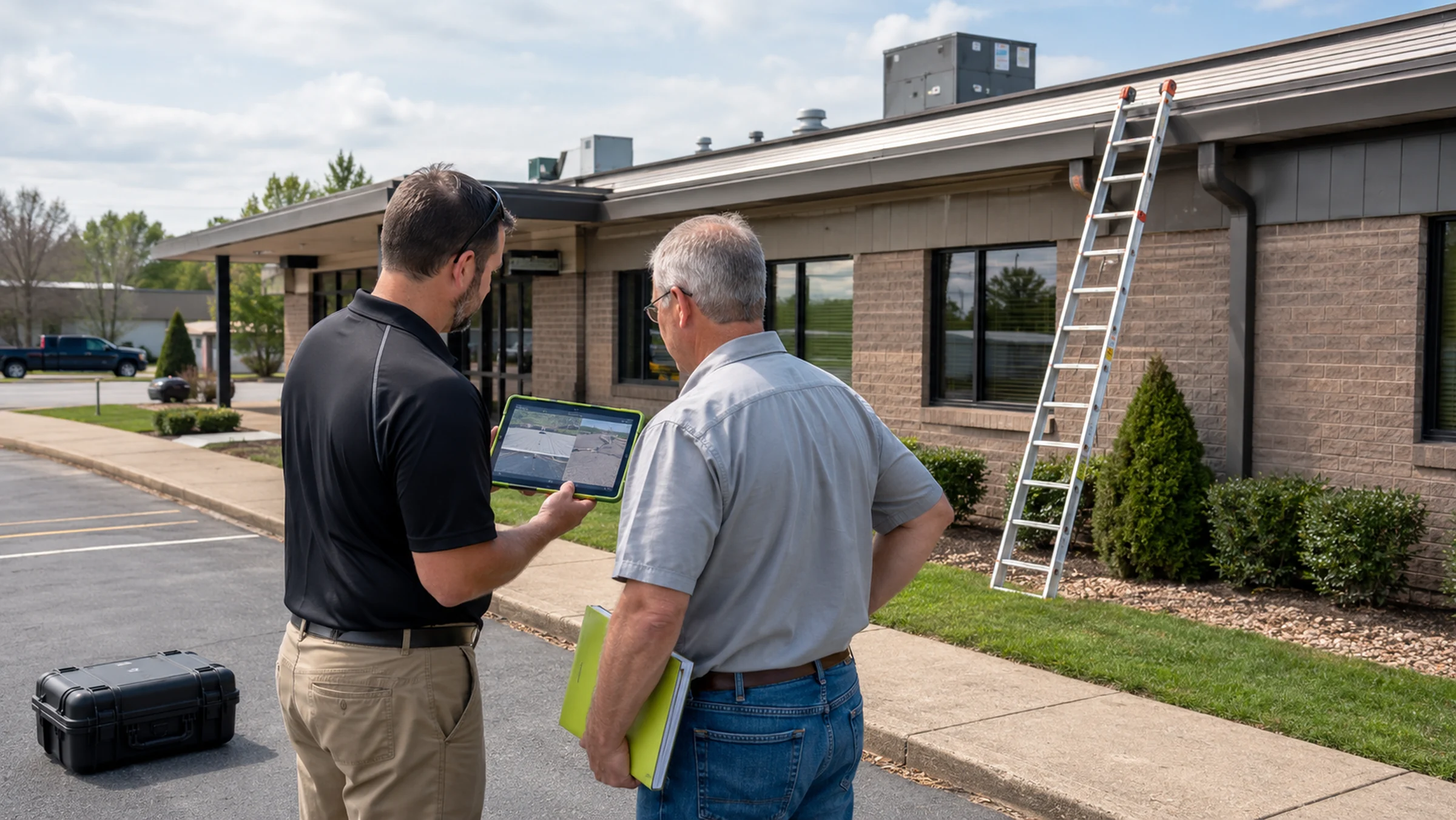
What drone roof documentation can and cannot prove
Aerial records support review, but they do not make the roof decision.
The value of drone roof documentation is that it gives the right reviewer a clear visual record. The limitation is that a photo set cannot touch, test, lift, certify, or determine hidden conditions.
What it can support
What it cannot prove
For paid commercial drone work under the FAA's Small UAS Rule, Part 107, the FAA says the remote pilot must hold a Remote Pilot Certificate. That operating credential supports safe commercial flight work; it is not a roofing, engineering, insurance, or code credential.
Documentation package
What a Good Drone Roof Documentation Package Should Include
A good roof documentation package should be easy for someone else to review. A folder of random photos is less valuable than organized imagery with context.
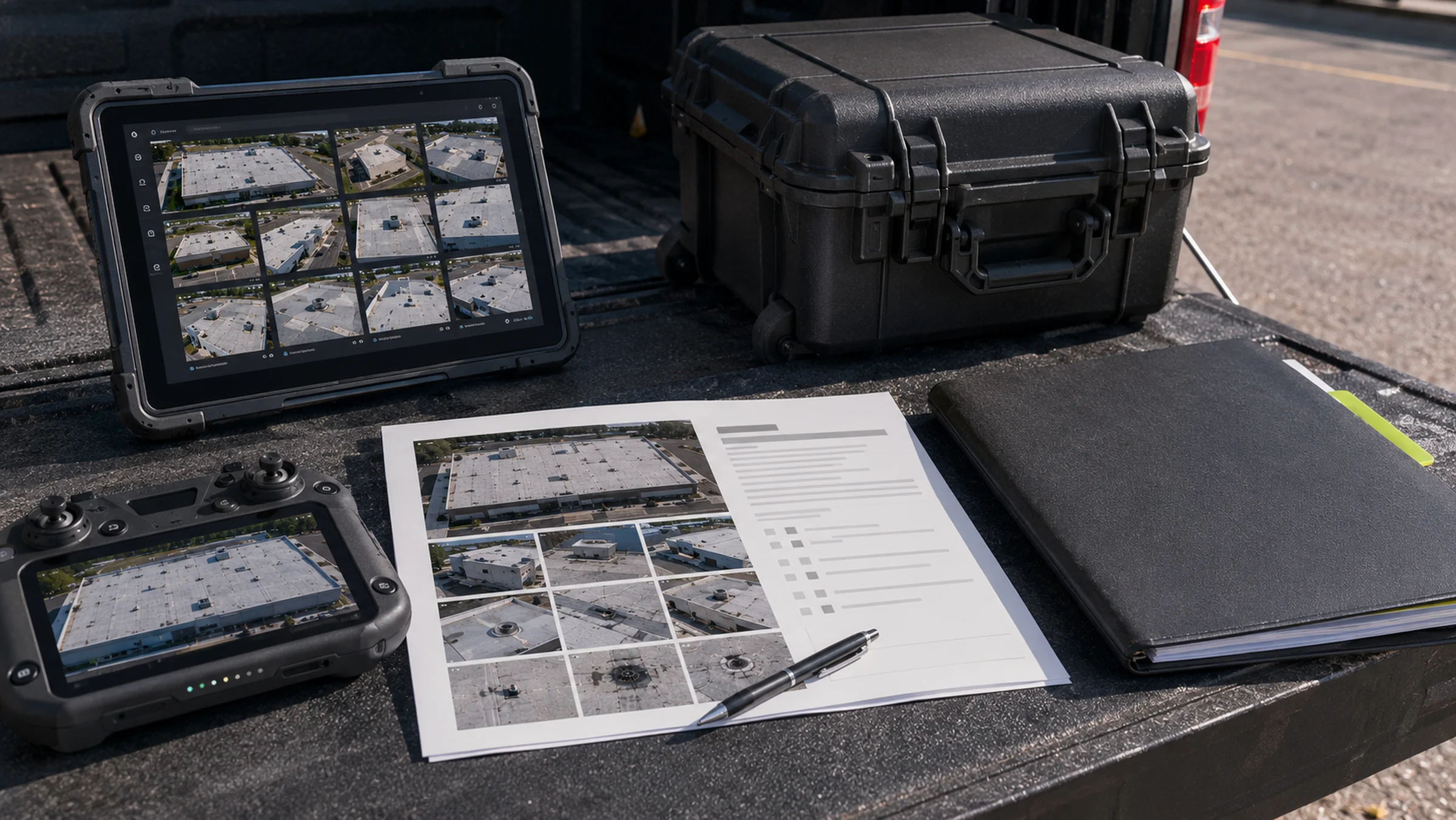
Public-facing boundary
How TwoBit Aerial approaches roof documentation
TwoBit Aerial provides drone inspection support for owners, roofing teams, contractors, reviewers, facility teams, and commercial property managers in Bolivar, Southwest Missouri, and nearby service areas. The goal is practical documentation, not exaggerated claims.
Drone imagery supports review. It is not engineering certification, roofing certification, insurance claim determination, or a legal survey.
What to send before requesting a quote
A useful roof documentation quote starts with the building, concern, reviewer, and deliverable.
Before requesting a quote, send enough context to decide whether the job needs a simple aerial image set, thermal screening support, a PDF summary, or follow-up by another professional.
Frequently asked questions
Straight answers before you schedule a flight.
Use these answers to decide whether aerial documentation is the right first step.
Is drone roof documentation the same as a roof inspection?
No. Drone roof documentation is an aerial image record of visible roof conditions. It can support review and planning, but it does not replace a qualified roofer, engineer, home inspector, insurance adjuster, or hands-on inspection when those determinations are needed.
When is drone roof documentation useful?
It is useful when a roof is steep, tall, large, difficult to access, or when an owner, contractor, or property manager needs organized overview and detail images before deciding the next step.
When do you still need a traditional roof inspection?
You still need the right hands-on professional when the question requires touch, lifting materials, testing, repair decisions, warranty review, code-related decisions, structural review, or a formal roof condition opinion.
Can drone roof photos be used for insurance conversations?
They can support communication and documentation by showing visible conditions at the time of capture. They do not determine coverage, causation, liability, payment, or whether a claim should be approved.
Can thermal imaging prove a roof leak?
Thermal imaging can sometimes show thermal patterns that deserve follow-up, especially on compatible roof systems under the right conditions. It should be treated as screening, not proof of a leak.
What should be included in a roof documentation package?
A useful package usually includes the project location and date, overview images, detail images of visible concerns, roof edges, penetrations, drainage areas, rooftop equipment, labeled folders, delivery notes, and an optional PDF summary when scoped.
What should I send before requesting a roof documentation quote?
Send the property address, building type, reason for documentation, known concern areas, recent storm or leak context, preferred timeline, site access notes, intended reviewer, and whether you need a simple image set or a PDF summary.
Summary
Final takeaway
Drone roof inspection is a common search phrase, but the safer buyer expectation is aerial roof documentation. It is a useful tool when the goal is visibility, organization, safety-conscious access, and clear visual records.
Use drone documentation when aerial visibility helps. Use qualified hands-on professionals when physical confirmation, repair decisions, insurance determinations, or certification are needed.
For many properties, especially large, steep, tall, commercial, or difficult-to-access roofs, drone roof documentation is one of the most useful first steps.
Sources and reference basis
Where the guidance comes from
This guide combines TwoBit Aerial's public roof-documentation service boundaries with external operating and infrared-roof-screening references. It is written for method selection and documentation planning, not as roofing certification, insurance determination, or engineering advice.
- FAA Remote Pilot Certificate
Used for commercial small UAS pilot framing.
- ASTM infrared roof-insulation reference
Used for thermal screening limits.
- TwoBit Aerial roof documentation service page
Used for roof-documentation service boundaries.
- TwoBit Aerial thermal roof screening service page
Used for thermal service boundaries.
- TwoBit Aerial FAQ
Used for inspection and quote-prep limits.
- TwoBit Aerial pricing page
Used for scope and pricing context.
- TwoBit Aerial service area
Used for local service-area framing.